REPORT ON GHANA’S PARTICIPATION IN ITB BERLIN 2026: OPPORTUNITIES, CHALLENGES, AND
STRATEGIC LESSONS FOR THE GERMAN MARKET
Introduction
Ghana’s participation in ITB Berlin 2026, the world’s leading travel trade exhibition, came at a strategically
important time for the country’s tourism sector. According to the Travel and Tour World, the 2026 edition
marked the 60th anniversary of ITB Berlin, and official reports indicate the fair drew nearly 97,000 trade
visitors, 5,601 exhibitors and participants from 166 countries, reaffirming its status as the most influential
global platform for destination marketing, tourism investment promotion, and trade relationship building.
For Ghana, participation in such a global marketplace was not merely ceremonial; it was an opportunity to
deepen market access in Germany and Europe, strengthen Ghana’s destination image, attract investors,
build tour operator partnerships and position the country more assertively within the increasingly competitive
African tourism landscape.
By official accounts, Ghana’s delegation was led by the Ghana Tourism Authority (GTA), with the
participation of public officials and private sector stakeholders. The country also used the platform to
celebrate Ghana Day and tie the event into the commemoration of Ghana’s 69th Independence
anniversary, which became one of the most positive and memorable aspects of the country’s presence.
However, while Ghana’s presence at ITB Berlin 2026 showed promise and generated goodwill, a deeper
evaluation suggests that the country’s participation was underwhelming relative to its potential. There
were clear opportunities missed in branding, stand location, trade preparation, media engagement,
visual storytelling, and pre-arranged B2B relationship-building. The result was a participation that was
visible, but not as impactful, strategic or commercially aggressive as Ghana’s potential in the German market
deserves.
- THE STRATEGIC IMPORTANCE OF GERMANY TO GHANA’S TOURISM AMBITIONS
Germany remains one of the most important outbound travel markets in Europe and one of the most
influential long-haul travel source markets globally. German travelers are known for:
high travel frequency,
longer lengths of stay,
interest in culture, heritage, ecotourism and authenticity,
strong spending power,
and a preference for well-structured, trustworthy destination information.
For Ghana, this is highly significant.
Ghana’s tourism offer aligns strongly with German market preferences:
heritage tourism (Cape Coast Castle, Elmina Castle, Fort Grossfriedrichsburg, transatlantic slave
history),
cultural tourism (festivals, chieftaincy, kente, fugu, drumming, dance),
nature and ecotourism (Mole National Park, Kakum National Park, Volta landscapes),
business and MICE tourism,
diaspora and roots tourism (Ghanaians are the largest African community in Germany),
wellness and emerging medical tourism, and
creative and culinary tourism.
In addition, Ghana enjoys certain structural advantages:
relative political stability,
English-speaking environment,
strong air connectivity potential,
a respected diplomatic footprint in Germany,
and an existing Ghanaian diaspora community that can act as cultural ambassadors and market
connectors.
The Embassy of Ghana in Berlin clearly recognised this broader opportunity, using ITB week not only for
destination promotion but also for investment engagement with the German business community and the
Ghanaian diaspora. The Embassy, together with the Ghana Investment Promotion Centre, even organised
an online investment webinar on 4 March 2026, bringing together German business interests and the
Ghanaian diaspora to present investment opportunities across priority sectors. (The Ghana Embassy – Berlin,
Germany)
This confirms an important point: the potential for Ghana in Germany is real and substantial. The issue
is not whether the market exists. The issue is whether Ghana is approaching that market with enough
seriousness, precision and strategic sophistication.
2. GHANA’S PRESENCE AT ITB BERLIN 2026: THE POSITIVES
To be fair and objective, Ghana’s participation had several commendable strengths.
a. Ghana Showed Up with Institutional Visibility

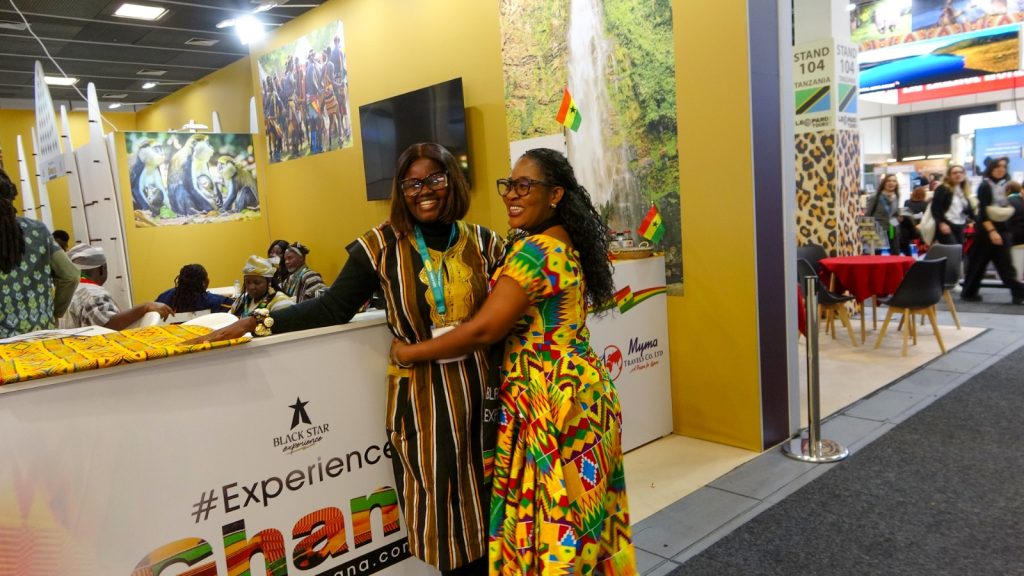
The Ghana Tourism Authority led the national delegation, supported by officials from the Ministry of
Tourism, Culture and Creative Arts and private sector operators. There were a number of private sector
participants that exhibited alongside government representatives. This is important because destination
promotion is strongest when public and private stakeholders show up together.
b. Ghana Day Was a Strong Highlight
One of the most successful elements of Ghana’s participation was the designation of 5 March 2026 as
“Ghana Day” at ITB Berlin. This created a focal moment within the fair and gave Ghana a narrative anchor
around which to organise visibility and audience engagement. CH Television from Ghana was present to
broadcast this celebration for its viewers to experience the moment.
The Independence Celebration Added Emotional and Cultural Depth
Perhaps the most memorable and commendable feature of Ghana’s participation was the decision to
integrate the 69th Independence Day celebration into activities at the Ghana stand. The Ghana Embassy
in Berlin, in collaboration with the Ghana Tourism Authority and Ministry of Tourism, Culture and Creative
Arts, used the stand to showcase:
- music,
- dance,
- Ghanaian cuisine,
- cultural presentations,
- Fugu/ batakari/ Smog
- and tourism destination storytelling.
This was a brilliant concept because it transformed a standard trade stand into a living national experience.
It gave Ghana something many destinations struggle to create at trade fairs: emotion, energy, symbolism,
and memorability. Rather than simply displaying brochures and banners, Ghana briefly became an
experience. That matters at ITB.
d. The Embassy’s Role Was Strategic and Highly Valuable
The Ghana Embassy in Berlin appears to have played an important supporting role by:
- connecting with the Ghanaian community,
- engaging institutional partners,
- facilitating investment discussions,
- and using the week to strengthen Ghana’s diplomatic and business profile in Germany.
This suggests a key lesson for the future: Ghana’s strongest ITB strategy will always be one that integrates tourism promotion with diplomacy, investment promotion, diaspora engagement, and media relations.
3. WHERE GHANA FELL SHORT: POOR PREPARATION AND UNDERPERFORMANCE AGAINST
POTENTIAL
Despite the positives, Ghana’s participation appears to have suffered from insufficient strategic
preparation.
a. Presence Was More Symbolic Than Commercially Aggressive
At a fair like ITB Berlin, success is not measured simply by showing up or attracting walk-in curiosity. It is
measured by:
- pre-scheduled trade meetings,
- buyer conversion,
- media coverage,
- partnership outcomes,
- itinerary inclusion by tour operators,
- investor leads,
- and post-fair follow-up pipelines.
From a tourism research, analyst and consultant point of view, Ghana’s participation was presented mainly in terms of cultural displays, visibility and general engagement. While these are valuable, there is little to no evidence of: - a strong pre-announced German trade outreach strategy,
- major tour operator signing sessions,
- dedicated press briefings with German travel media,
- structured destination product launches,
- or measurable deal-making targets.
That is a concern. At ITB, countries that win are not merely attractive; they are prepared.
Ghana’s Preparation Did Not Match the Sophistication of Competing Destinations
Other destinations use ITB to:
- launch themed campaigns,
- unveil new market-specific messaging,
- host formal press conferences,
- secure trade agreements,
- run tightly branded pavilions,
- and deploy multilingual materials designed specifically for German and European buyers.
I had the privilege of visiting all the African countries with CH Television and interviewing most of these
countries, most of them presented clear market narratives.
By contrast, Ghana’s presentation, though culturally rich, appears to have leaned heavily on familiar national
symbols rather than a sharp, modern, buyer-facing German-market proposition.
- UNATTRACTIVE BRANDING: GHANA DID NOT SELL THE FULL POWER OF ITS STORY
This is perhaps the most critical weakness.
a. Ghana’s Branding Appeared Generic Rather Than Market-Shaping
Reports mention:
- traditional arts,
- kente cloth,
- snacks,
- cultural displays,
- and multimedia presentations.
These are useful elements, but they are not enough.
Too often, African destinations rely on: - culture,
- colour,
- textiles,
- dance,
- exotic wild animals
- and cuisine
…without translating these into a clear commercial destination proposition.
For Germany, Ghana needed branding that answered: - Why Ghana over competing African destinations?
- What exact itineraries are ready for the German market?
- What niche experiences can German tour operators package immediately?
- What is Ghana’s comparative edge in West Africa?
- Why should a German buyer choose Ghana now?
Without that clarity, cultural performance becomes spectacle rather than strategy.
Ghana’s Brand Needed a Strong Theme
A country like Ghana should not appear at ITB Berlin without a strong unifying brand concept such as:
- Ghana: West Africa’s Gateway to Heritage, Culture and Investment
- Ghana: Where Africa’s Story Begins
- Ghana: Safe, Authentic, Investable
- Ghana: Heritage, Warmth, Opportunity
Instead of a visually arresting and strategically layered brand narrative, the country appears to have relied
more on a traditional showcase model.
That is not enough for Europe’s most competitive travel marketplace.
The Visual Language Must Be Elevated
Ghana’s stand should feel: - premium,
- contemporary,
- confident,
- immersive,
- and internationally competitive.
A national stand at ITB should not look like a cultural booth; it should look like a destination investment and
travel command centre.
5. POOR LOCATION OF THE GHANA STAND: A STRUCTURAL HANDICAP
Even when a country has a strong story, stand location matters enormously at ITB Berlin. A poor or less
trafficked hall position can significantly affect:
- walk-in traffic,
- buyer spontaneity,
- media drop-ins,
- visibility to hosted buyers,
- and overall perception.
If Ghana’s stand was not positioned in a prime or strategically advantageous section relative to competing - African destinations or priority market traffic, then Ghana was starting the race from behind.
- A weaker location is not an excuse, but it is a reality.
- This means that when location is not ideal, a country must compensate through:
- more aggressive appointment scheduling,
- stronger digital lead generation,
- better signage,
- roaming ambassadors,
- cross-hall activations,
- hosted side events,
- and targeted media draws.
If the stand is in a poor position and the country also lacks aggressive outreach, then even a good destination
can become invisible.
6. THE MISSED OPPORTUNITY: GERMAN MEDIA WAS NOT SUFFICIENTLY ACTIVATED
This is one of the biggest lessons from Ghana’s ITB 2026 participation. Ghana Needed Pre-Arranged
Meetings with German Media. For a market like Germany, media engagement should never be left to
chance.
Ghana should have entered ITB Berlin with:
- a pre-curated list of German travel journalists,
- editors from destination and lifestyle publications,
- broadcast travel producers,
- tour trade media,
- bloggers and content creators,
- diaspora media,
- and niche publications covering culture, heritage, luxury, sustainability, wellness and African travel.
These meetings should have been arranged weeks in advance, not improvised on the exhibition floor.
Why these matter
German media can:
- shape destination awareness,
- influence tour operator packaging,
- build consumer trust,
- introduce Ghana to first-time long-haul leisure audiences,
- and create sustained visibility far beyond the three days of ITB.
What should have been prepared
Ghana should have had: - a dedicated press kit in German and English,
- high-quality destination imagery,
- a market-ready media fact sheet,
- story angles tailored to German audiences,
- interview access to GTA/Ministry of Tourism leadership,
- access to private sector product owners,
- a media-friendly calendar of events,
- and post-ITB press trip invitations.
What stories Germany would buy
German media would likely respond strongly to: - Ghana as the gateway to West Africa,
- the Year of Return/Beyond the Return legacy/Black Star Experience,
- heritage and ancestral journeys,
- authentic festivals,
- Afro-contemporary culture and design,
- sustainable community tourism,
- birding, eco and wildlife experiences,
culinary travel, - beach and coastal escapes,
- and increasingly, business and culture hybrid travel.
Without structured media engagement, Ghana may have gained footfall, but not enough narrative
penetration in the German market.
- GHANA MUST MOVE FROM EXHIBITION TO MARKET STRATEGY
Ghana’s future success at ITB Berlin depends on a mindset shift.
ITB is not a display event. It is a market-entry and market-expansion battlefield.
To truly maximize Germany, Ghana must prepare ITB like a campaign:
Before ITB
- Map the German market by segment:
o cultural leisure
o heritage and diaspora
o adventure/ecotourism
o luxury and boutique travel
o educational travel
o wellness/medical tourism
o MICE and incentive travel - Schedule 30–50 pre-arranged B2B meetings
Secure 10–20 media appointments - Host a Ghana destination breakfast or evening networking reception
- Prepare German-language sales tools
- Train exhibitors on a common national pitch
- Build a digital lead capture system
During ITB - Run a strong stand program every day
- Separate cultural activations from commercial sessions
- Use a visible spokesperson or market-facing moderator
- Hold at least one structured press briefing
- Announce a new route, new campaign, or new tourism initiative
- Promote Ghana beyond the stand through satellite events
After ITB - Follow up within 7–10 days
- Send customised proposals to operators
- Convert media interest into press trips
- Track leads, agreements and sales outcomes
- Produce a post-fair ROI report
- KEY RECOMMENDATIONS FOR GHANA’S FUTURE PARTICIPATION
Develop a Distinct Germany Strategy
Ghana should stop treating ITB Berlin as a generic global fair and instead approach it as a Germany-specific
and DACH-market-specific campaign.
Secure a Better Stand Position
Stand location must become a strategic priority in negotiations and planning.
Redesign Ghana’s National Branding
Move beyond cultural display toward a premium, market-smart destination narrative.
Create a Stronger Pavilion Experience
The stand should communicate:
modernity,
investability,
safety,
depth of product,
bookable experiences,
and premium hospitality.
Institutionalise Media Appointments
A German media strategy must be built into every ITB plan.
Make Ghana Day Bigger and More Commercially Useful
Ghana Day was a success, but next time it should include:
a formal trade reception,
a press moment,
product presentations,
and deal-signing or launch announcements.
Better Prepare the Private Sector
Exhibitors should arrive with:
pricing sheets,
itineraries,
German-ready materials,
partnership offers,
and clear product differentiation.
Integrate Tourism, Trade and Diplomacy
The Embassy, GTA, GIPC, airlines, hoteliers, DMCs, and private operators should function as one market
team. - Introduction of E-Visas Regime
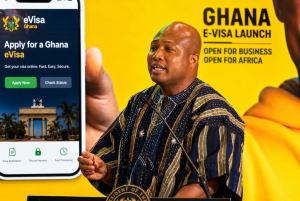
Ghana should introduce an e-visa regime for German tourists because Germany represents a high-value source market whose travelers prioritize convenience, predictability and digital access. Requiring traditional embassy-based visa processing creates avoidable friction that can divert potential visitors to competing African destinations with easier entry systems. A secure and efficient e-visa platform would enhance Ghana’s competitiveness, increase leisure and business arrivals, improve tourism receipts, strengthen bilateral relations and project Ghana as a modern, investor-friendly and tourism-ready destination. In today’s global travel economy, visa facilitation is no longer merely an immigration matter; it is a strategic tourism and economic growth policy.
Conclusion
Ghana’s participation in ITB Berlin 2026 was important, visible and symbolically meaningful. The country
showed up at one of the world’s most powerful tourism marketplaces, participated with both public and private
stakeholders and leveraged the platform to celebrate Ghana Day and the 69th Independence anniversary
in a way that brought cultural pride, emotional resonance, and memorable visibility to the national stand. That
independence-linked celebration was undoubtedly one of the strongest highlights of Ghana’s presence and
demonstrated how national identity can be used effectively in destination promotion.
Yet, when measured against the true scale of Ghana’s potential in Germany, the participation was not
strong enough.
Ghana remains one of Africa’s most compelling tourism and investment stories for the German market, but
at ITB Berlin 2026, the country appears to have been present without being fully positioned, visible
without being dominant, and active without being sufficiently strategic.
The lessons are clear:
- preparation must improve,
- branding must become more sophisticated,
- stand placement must be prioritised,
- German media must be pre-engaged,
- and every participation must be driven by measurable business objectives.
If Ghana applies these lessons, then future editions of ITB Berlin can become more than attendance
exercises. They can become high-impact market breakthroughs.
Ghana has the product. Ghana has the story. Ghana has the cultural depth. Ghana has the credibility.
What is now required is sharper execution.
Presented by Emmanuel Frimpong, President of Africa Tourism Research Network and a Tourism Consultant and Analyst on behalf of the ATRN Consultancy Team in Germany.